
Editorial
A Soft Guide to Chill, in conversation with BBTCOR
by El Bickers
withClaartje Barkhof, Sarah Saleh
Listening spaces have witnessed a revival across Europe in recent years, often in response to an increasing demand for people to slow down. Such listening spaces invite a tendency to lean into ideas of wellness and spirituality, whether it is to meditate, soothe your nervous system, or simply remove yourself from the overstimulation of life. This package of rest and reclination posits the question: by engaging with prescribed listening are we connecting with the environment around us, or only with ourselves? In our current clubbing ecosystem, the need to stay connected is perhaps stronger than ever, yet we are met with an infrastructure that demands us to project our online identity into offline social currency, dancefloors are becoming harder to fill, and escapism is no longer in line with optimising our mind and bodies. But something is bubbling in the undergrowth of Amsterdam's club and art community that wants to bridge deep listening with the connective tissue of movement; less about switching off and more about tuning in. This is the chill out room, a subculture born from the horizontal corners of 90s dancefloors that offered a space of respite from peak time raving. It is where dancers could wind down whilst remaining resistant and in tune with the politics of movement. Nowadays, chill out rooms are important to channel new ideas of connecting, and challenge the status quo within today's club culture. In conversation with Sarah Saleh and Claartje Barkhof from Amsterdam's BBTCOR, this interview unveils new forms of the chill out room and what the future could hold for these spaces.
El
Do you want to start off by explaining what BBTCOR is, and your involvement within it?
Claartje
We came up with the name 'bring back the chill out room' after we discovered chill out as a musical style. We were then wondering why there wasn't a dedicated space or culture for chill out sounds. That's where the name came from, because it's an active call out to bring it back.
Sarah
We started on the radio in 2021 on TNP which is where we discovered a lot of labels, such as Waveform, Apollo, Warp, em:t, and Silent Records. At some point Claartje sent me an article about the history of chill out rooms, as we hadn't previously linked these concepts together. Instead, our name 'chill out' came from all these album compilations we had discovered.

El
What made you connect with chill out and downtempo music in the first place?
Claartje
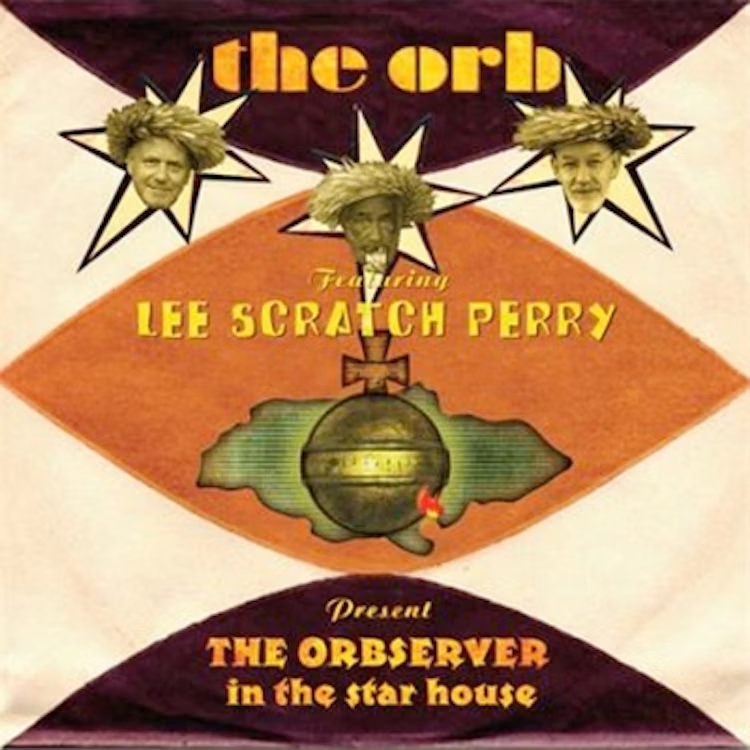
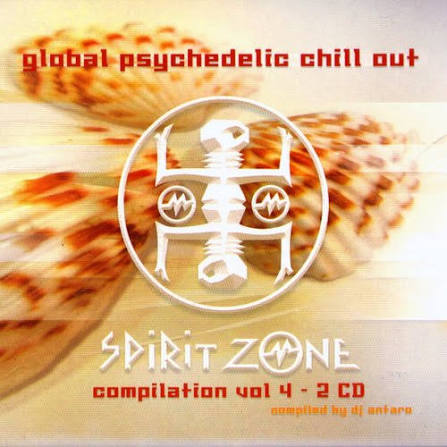
We were already playing different types of downtempo music such as dub, ambient, trance, and we were heavily influenced by the CD collection of my dad which introduced me to artists and bands like Intermix, The Orb, and Lee Scratch Perry. 90s Mixtape compilations also caught our attention, such as The Global Psychedelic Chill Out series. That's when we realised chill out was an entire genre of its own.
Chill out has this classic genre defined idea from balearic sounds in Ibiza and so on, but what's more interesting for us is that it can be these crossroads between a lot of other stuff we were already listening to, such as sounds from Lebanon, Morocco, Egypt and Syria which blends really well together.
Sarah
I think the influence of psychedelic music comes from my dad as he listened to a lot of classics from Jimi Hendrix and The Doors, which really was some of the starting points of this psychedelic sound that I became into.
El
I'm curious what you said about discovering all this chill out music, literally boxed in, like the CD packaging that had a very similar aesthetic in the sound design, the production, in the way they were sold. Is there something you could expand upon that you want to contribute to the landscape of chill out spaces?
Sarah
We do the events in different spaces, such as Club RAUM for Spielraum weekenders, No Clubs at INGANG, Van Gogh museum, De Diaconie for Spirit of Amsterdam, and Club Records. By hosting events in both a listening and club context, we satisfy the project's way of intersecting the music and art scene. This is because we also have a big focus on spatial intervention and scenography. Museums can be a great way to exhibit this work, especially now that the museum space is becoming more democratized for young people to access as artists.
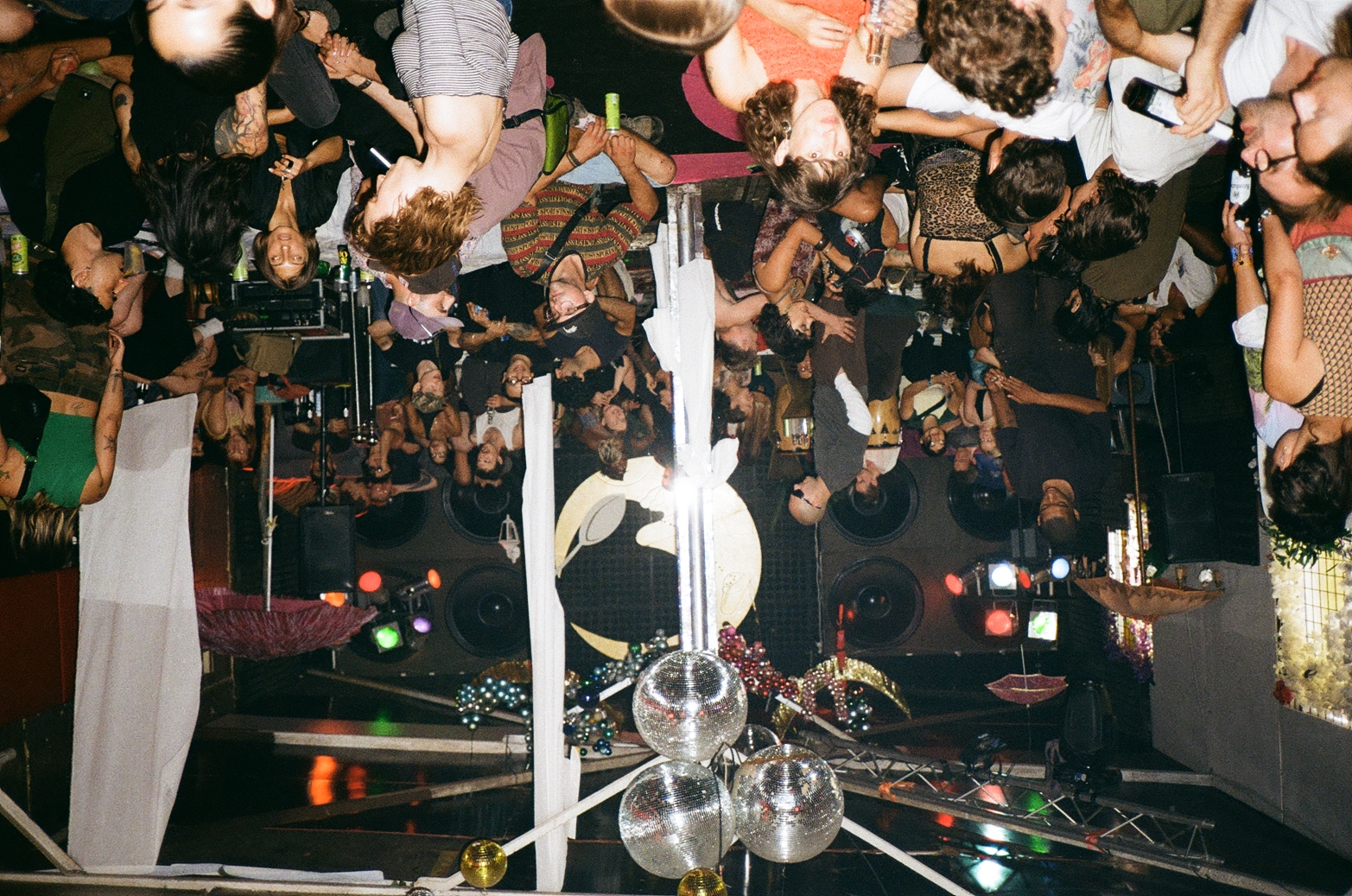
We also work with clubs because the foundational root of this project is to bring back the chill out room to clubs that carry an uptempo energy. We want to create a cozy environment in spaces that often feel dark. Over the years we have seen the need for this especially during long weekenders where people need a place to chill down and listen to slower sounds, and to accompany this with scenography that creates a warm atmosphere. All you need is a good space, good soundsystem and programming that fits.
To add, I think downtempo music can transport you to different worlds. Someone sent us a sweet message after our chill out room takeover at the opening weekender of INGANG with noclubs and giegling, saying they felt like they were floating high in a hot air balloon. But with being transported to these different worlds, it's not about escapism - we don't want to escape. It's about being present and the ability to dream.
Claartje
With downtempo music, people can associate it with lying down. But for me that's not the vibe at all. You can resonate with really deep basses in a club, and it can be quite intense. What really helps is a good sound system. If you collaborate with systems like Addit Audio or Kantarion, like we have, it really changes the way in which you experience music. Here you can listen to the different layers of sound and become totally immersed.
El
You mentioned this idea of escapism which is not what BBTCOR is about. Yet you also want to ground it in understanding where the culture and existing narratives come from. Obviously a lot of 90s chill out culture is rooted in hedonism and escapism. So what fresh perspective are you bringing to the contemporary landscape?
Sarah
I think in the first place, it's not about having it as the chill out place in the sense that you have to wind down from something high paced. That it can also be the primary experience you can go for. Or that it can be parallel to something else without it having to be an escape from something. I think it's a space to rest also, as slow movement can also be an act of rest and relaxation. We live in a capitalistic world where everything has to happen quickly. So this is really a space to be in the present, relax, listen, daydream and connect with people without feeling the pressure of having too many rules.
Claartje
What's nice about a chill out room is that you can experience it both slowly and intensely. Depending on the other programming during an event or club night, the music could be contrasting or similar in depth and intensity.
Sarah
This weekend at noclubs x giegling I was especially happy to see many people dancing and moving in the chillout room. That's when I understood that we achieved what we set out to achieve. Because I think a lot of people have a misconception of what downtempo music is. Or they call it the ambient room. Of course, there are ambient sounds, and ambient can mean many different things. But it's also a place to listen to a lower BPM, and to apply movement to that.
El
It feels like you have a strong idea about what you want to bring to the chill out space, but without prescribing how people should behave or interact. Which I feel like has been a bit of a narrative with listening spaces in general. So it's nice that you have this more democratised space occurring.
Sarah
Exactly. It's not a 'no shoes allowed' policy.
Claartje
I don't think you need a set of rules if you already create a certain kind of energy in the space. As well as the sound, we also work with scenography and utilise this to create and attract a certain warmth and friendliness. With this multidisciplinary approach, so far we haven't had to inform anyone how to behave in our space.
It's great to have this type of agency with the events. When we first started out we were invited to bars where they would always get mad at us for the style of music we played. It was too alternative. We were misfits everywhere we went. That's one of the key reasons we wanted to start our own events, to play freely.
Sarah
I think what's also nice about people playing in the chill out room is that artists don't necessarily feel this pressure of pleasing a crowd, because there are no rules. It's a bit of a low-pressure environment for everyone involved.
El
I think people are becoming more attuned to the importance of having a chill out space. Not just a few seating areas where you can sit and chat to friends and others, but one that's carefully curated in a multidisciplinary way so that people can have a genuine dance floor experience there. How do you see chill out rooms becoming more prevalent in clubs and in club dance floors? And how are they going to alter the landscape?
Sarah
With some club nights, I sometimes felt that the chill out room was considered an extra room, and not incorporated into the night itself. I think that's also something that we're still working towards. For example, fees for chill out room artists are typically lower, even though the artists who are invited are incredibly good. It would be nice to invite artists who play in main club rooms to also contribute to the chill out floor, as artists have other sides of their collection to show. For example, Waking Life did this in their Mimo stage curation, and we invited Mama Snake to play for one of our BBTCOR takeovers during Spielraum at Club RAUM. We're excited to see how this evolves.
El
With this approach between club culture and the arts, why is it important for you to approach this in an interdisciplinary way?
Claartje
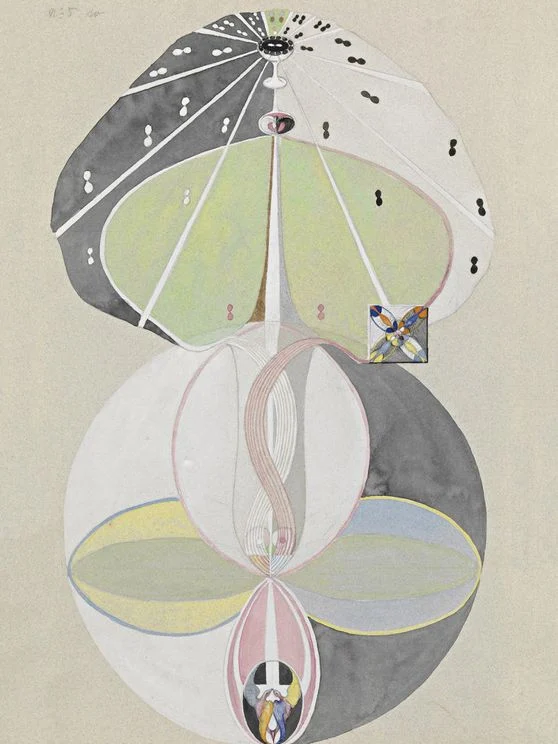
It can be nice to expose people to our work who don't go clubbing, for example we held an event as part of the Spirit of Amsterdam in the Protestantse Diaconie which we transformed into a different realm with visual design and scenography. The scenography of what we're doing at W139 is different from what we're doing at clubs. The inspiration comes from stained glass windows you find in religious institutions that are highly symbolic. I find symbols interesting as it is an abstract way to express concepts and stories. A very influential artist who did this for theosophical concepts is Hilma Af Klinkt, a feminist modernist that was highly influential for modern abstract art. I have seen multiple exhibitions about early feminist modern abstract art and it fascinates me a lot: the endless possibilities of abstract art and rhythms you can create with it. I think it works well together with the abstractness and layeredness of the music we like. And it's an ode to women in abstraction.
El
You've spoken a bit about the importance of having different disciplines, being present in the club and art worlds. You're also developing a research platform and archive. Why do you think it's useful to combine an event series of chill out dance floors with this research element that's diving into the sonic and cultural history?
Sarah
I don't think a lot of people are familiar with the chill out room itself. It's nice to have a platform where people can actually understand the roots, to share where these sounds come from, and where the concept comes from. Not to recreate a sense of 90s nostalgia, but to develop a fresh perspective and also a critical lens on what chill out rooms could look like today. It comes from history and from the archives, and using that information to respond to why we created what we create today.
El
What parts would you still be inspired by or take from the 90s era? And what parts would you leave behind for a chill out room today?
Claartje
One thing that I'd like to keep from that era is the sense of joy that seems to come from it. That anything is possible. Our chill out rooms are not prescribing an idea or behaviour to someone. There's a bit of freedom around it.
Sarah
I want to leave this whole nostalgia of only playing 90s music, because there's a lot of new artists that are very interesting that produce a lot of nice downtempo music. It's nice to have a mix, as within my own practice I like working with the past and present. So it's about finding this fine line between what happened in the past and what's happening today and to try to incorporate both of them. I would also leave behind this need to escape that I explained previously, and for there to be a softer and more feminine edge to it. Hence our new manifesto "A Soft Guide to Chill".
El
Can you explain what "A Soft Guide to Chill' means?
Claartje
It's our new manifesto which is informing our upcoming exhibition at W139 this October. The manifesto reimagines nightlife through slowness, rest, listening, and care. It argues that nightlife doesn't always have to be about dancing, movement, consumption, and performance. A Soft Guide to Chill brings back the chill out room as a practice rather than a nostalgic recreation, a space where people can dance, lie down, listen, connect, disappear, or simply do nothing. It also connects this idea to the forgotten underground histories and communities that shaped chill out culture, while framing rest as a political act in a culture that constantly demands productivity. It's about making nightlife softer, more inclusive, more communal, and more human, somewhere between dancing and dreaming.
El
You mentioned earlier that a big part of your concept is that it's not just for sitting in silence and listening to the music, but it is a dance floor and a space for movement. How do you explain this to someone who has only been introduced to these more like silent listening experiences?
Claartje
We want the energy we create with the sound and scenography to invite people into the space, and it is these components that show people how to interact and behave. You can direct people a lot with the scenography you choose. For example, the more pillows you put on the floor the more likely people are going to lie down. We designed our carpet in the first place for a space that had a concrete floor.
Sarah
It's also to do with when and where it's programmed. We've also been programmed super early in the morning and then you really have this transition from night to day where people really do want to lay down and do nothing. Or it's a weekender and some people are sleeping, vs people who are building up energy in tune with the hype of the club. You get the crossover from creatures of the night to day time dwellers. The people dance, then the people chill. It's riding the wave of the weekend, that the chill out room also follows in a musical sense.
El
How do you envision the future of chill out rooms and what do you think they can bring as sanctuaries of slow resistance?
Sarah
I hope to see the chill out room as a primary space you can programme at any time of the day, where government subsidies can understand that the chill out room is just as much part of the club culture of the day than it is of the night. I hope that more clubs will open chill out rooms as we live in a world where everything is super fast paced online, and with everything that is happening politically, people need some time to relax, dream a bit, and connect with others to think of a better world. That for me is the hope I wish to bring with this project.