
Editorial
Spacing Out with DJ Athome
by El Bickers
withMaurizio Ferrara (DJ Athome)
Firmly rooted in Belgium's electronic scene, DJ Athome has been tracing the sonic threads of chill out music for the past three decades, growing up on the ethereal cereal of Ozric Tentacles and other prolific live bands who mainly spawned in the UK's new age and stone-hengian musical movement of the 80s, and the psychonautic philosophy of Terrence McKenna which indoctrinated the psychedelia of space rock, dub and ambient with hippie hedonism. Whether rooted in mystical autonomous zones, or firmly within the walls of a large concert venue, the following conversation is a snapshot archive of the history of chill out, tracing the cross-pollination of psychedelic rock with dub - a melting pot of sounds from multiple corners of our stratosphere.
EB
Can you introduce yourself and what your involvement is in the underground music scene?
DJ Athome
My name is Maurizio Ferrara; I am 55 years old, living and working in Brussels. My artistic life is split between Rome and Brussels for 20 years. I work as a psychologist and psychotherapist, specifically within the queer and nightlife communities in Brussels. The other half of my life is dedicated to music, DJing, and production (Dj Athome, Front de Cadeaux).
To put it briefly, as Dj and producer I became involved in the underground music scene in 1996, starting to produce, hosting a radio show for 22 years (Radio Panik, Brussels) and co-founding a DIY electronic music label in 2000 (Pneu Records). In 2006, I met Hugo Sanchez; we collaborated extensively before launching the project "Front de Cadeaux" in 2013. My passion then evolved into a deeper commitment by producing, remixing, curating and having a monthly residency at Kiosk Radio.
EB
You have been active since the 90s in Belgium. Can you give us a bit of an oversight into Belgian's psychedelic dub and downtempo scene from the earlier days? Where were the main cities and venues for this kind of sound? Which artists, bands and mentionable names were pushing this sonic culture?
DJ Athome
To begin with, these events centered on artists performing live concerts rather than on DJs. Maximum attention was focused on the music. The format for psychedelic, space rock, ambient, dub, and chill-out events in the 90s was different; they took place primarily in concert halls and at festivals, rather than in clubs.
DJ Athome
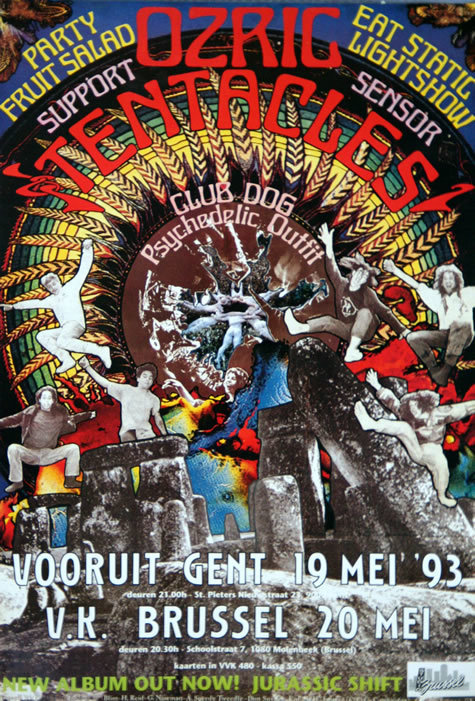
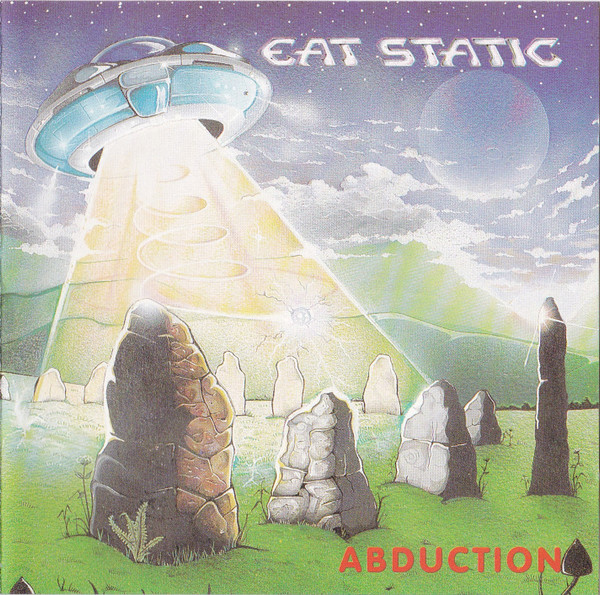
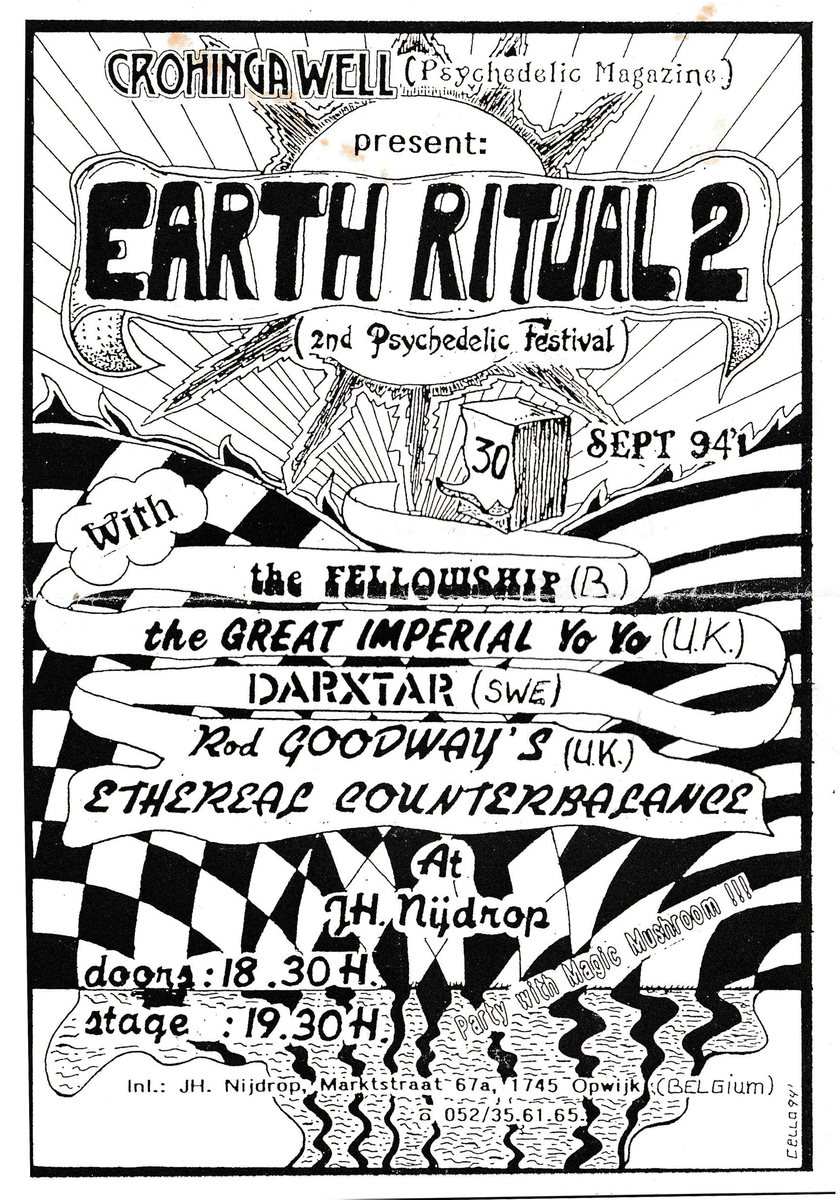
In Belgium, venues like Muziekcentrum Nijdrop in Opwijk were key hotspots from the early 90s onwards hosting acts such as Ozric Tentacles in 1992. Nijdrop's events were directly modeled on the British "Megadog" parties. That same year, a group of friends and I, along with a collective called Indica Sound System, organized events at a venue known as "La Cave" in Liège, Belgium. We invited psychedelic dub acts such as Zion Train, Revolutionary Dub Warriors, Dreadzone, Dub Merge, and many others. The Vooruit in Ghent hosted Eat Static's first concert in 1993, coinciding with the release of their album Abduction alongside Senser and Ozric Tentacles.
DJ Athome
In its early days, the Dour Festival also helped raise the profile of this British scene. There were so many interesting bands and no internet propaganda. A magazine like Crohinga Well allowed fans to navigate the scene, find out who was playing where and when, and (crucially) order cassette tapes. Outsoon Magazine was also a reference to follow that scene.
DJ Athome
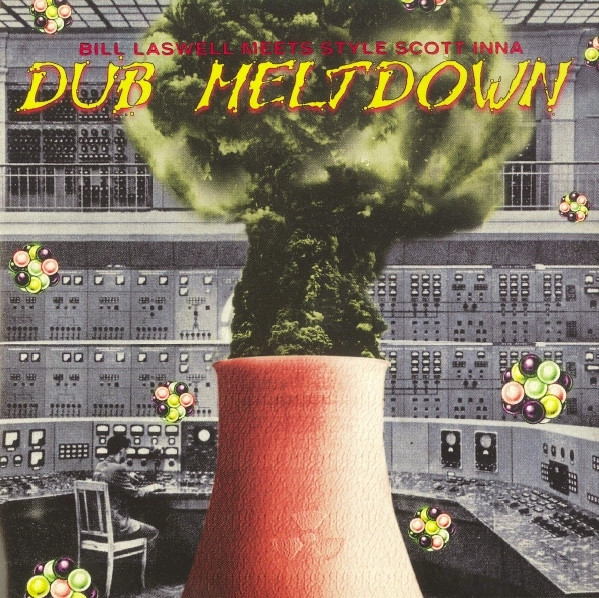
The most influential artists of the era came not only from the space rock scene but also from the global, dub, and ambient scenes - acts like Jah Wobble's Invaders of the Heart, The Orb, Suns of Arqa, Mixmaster Morris, and Future Sound of London, to name the most famous. Artists such as Steve Hillage (System 7, Gong), Bill Laswell and Haruomi Hosono also made significant contributions. Other groups that are essential in this circuit: Drum Club, Astralasia, Higher Intelligence Agency, Exquisite Corpse, Loop Guru, Transglobal Underground, Muslimgauze, O Yoku Conjugate, Spacetime Continuum, African Head Charge, The Ullulators, Psychick Warriors Ov Gaia, Rapoon, TUU, The Oroonies, Tribal Drift, Air Liquide, Meat beat Manifesto, Another Green World, Sounds from the Ground, Jorge Reyes, Sabres of Paradise, Leftfield. This era was further inspired by the rise of psychedelic culture including philosophical and anthropological approaches by figures like Timothy Leary, William Burroughs, Terence McKenna, and John C. Lilly all of whom have also produced music with artists of that scene.
EB
Can you remember the first gig or club you went to where you heard this psychedelic 'chill out' sound. Who was playing and what reaction did it invoke for you? What made you want to explore more of this world?
DJ Athome
There wasn't a proper club in Belgium playing that kind of music. Fuse did host artists like The Orb in 1994, but there wasn't a regular "club" scene quite like Club Dog or Megadog in London. The only real venue was Nijdrop, and I still remember that night with the performance by TUU in 1995: a long, shamanic trance experience that opened my eyes to dancefloor possibilities.
EB
My first encounter of your work was when I stumbled across a compilation series called "Spaced Out!" that you curated. It contains some of my favourite space rock groups like Ozric Tentacles and Magic Mushroom Band. Why did you choose to curate this compilation and what does the sonic work of these artists mean to you?
DJ Athome
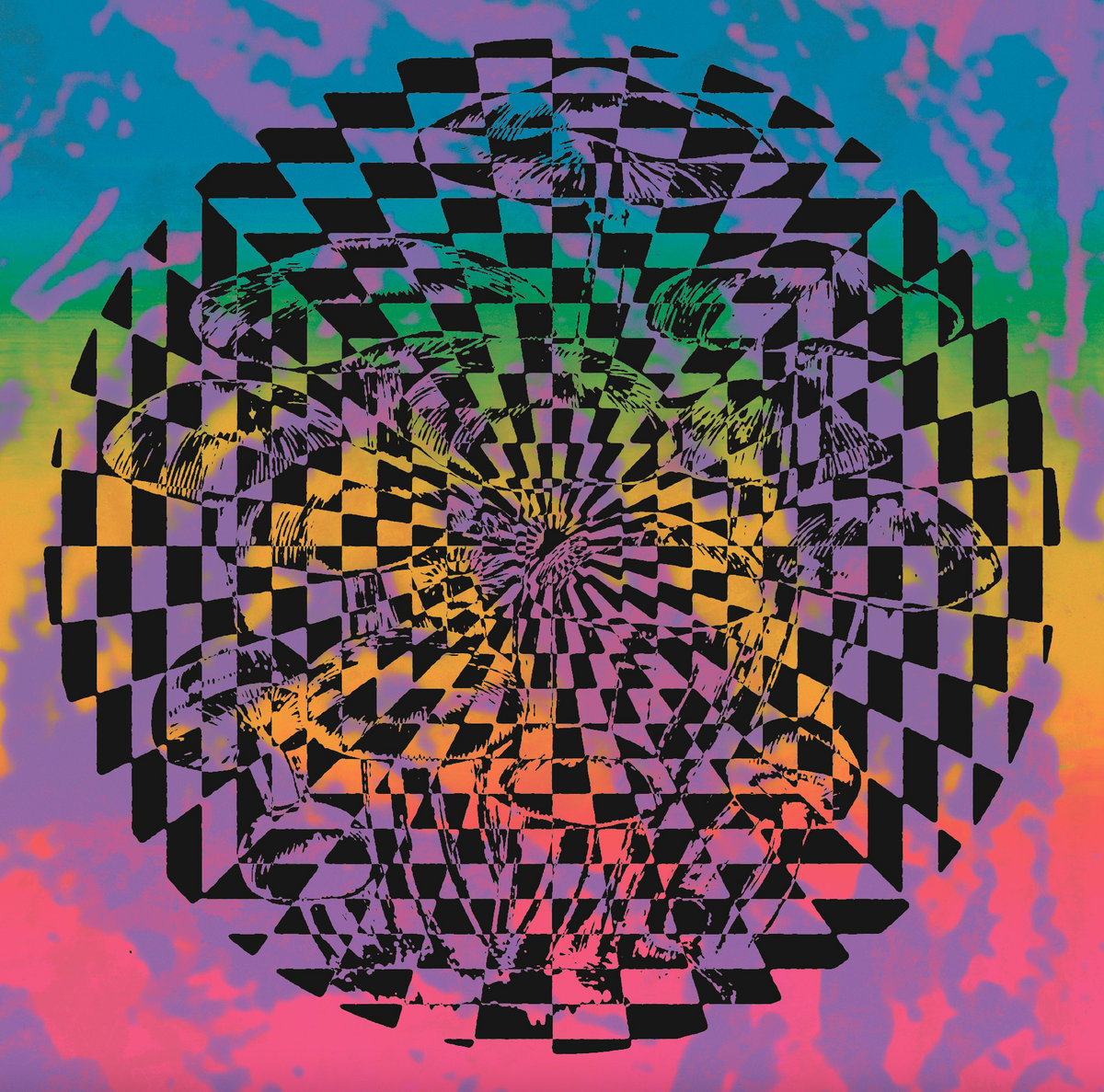
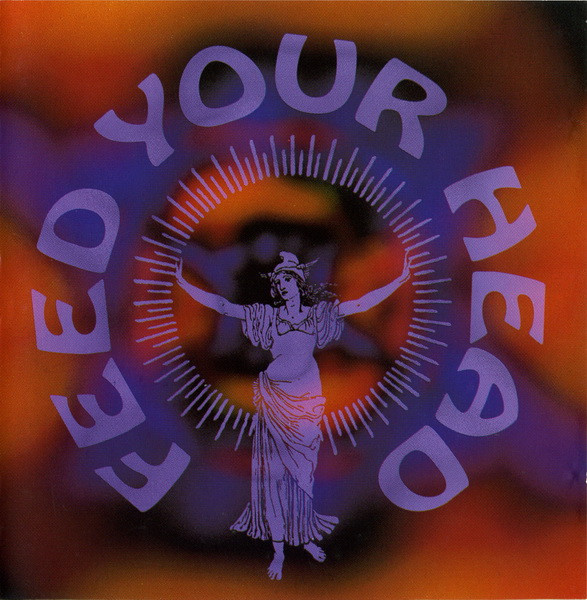
I've always dreamed of curating a compilation. Kind of like when I used to make mixtapes for my friends. Throughout my career as a DJ, I have always tried to include older tracks from that era; having kept my archives - vinyl, cassettes, CDs, and magazines - I came up with the idea of curating a compilation inspired by the Feed Your Head series released by Planet Dog between 1992 and 1996. Ultimately, it is a very intimate relationship with a musical era rather than with specific artists. "Ambient dub" compilations proliferated in the 90s, and some (such as the em:t series) became essential in my musical universe, whether for inspiration, listening or tripping out.
EB
To continue about the "Spaced Out!" compilation, I read in the accompanying zine written by David Borsu that the compilation is dedicated to Andrew Weatherall. Could you talk about why this is, and the ways in which Andrew Weatherall has inspired your outlook on music?
DJ Athome
The reference to Andrew made sense in a way. It was originally Ed Isar's idea, but I was immediately sold. It was also through that scene that I discovered Andrew Weatherall, specifically via his remix of a track by Jah Wobble's Invaders of the Heart ("Bomba," 1990) that became an Ibiza classic. This tribute also resonates when rediscovering the compilations released on Sabrettes in the 90s.
The leftfield/dub side of Weatherall's productions inspired strongly my first steps into production and my early remixes, such as the ones for Dark Strands ("Slide") on Nein Records and Alien Alien ("Sambaca") on Roccodisco and Slow Motion Records. I was of course overjoyed when friends told me that they had both played at ALFOS.
Around the same time, Front de Cadeaux signed an EP with Subfield and Geoffroy Mugwump invited us to contribute to his *Moving House* compilation (Subfield 2017) which also featured a track by Andrew Weatherall. This compilation explores the downtempo legacy initiated in 2010 by the chug slow-mo dance wave.
This tribute brings everything full circle. We will forever miss Andrew and his visionary spirit.
EB
Do you have any cassettes, albums or other sonic work that really encapsulates this chill out and psychedelic sound for you?
DJ Athome
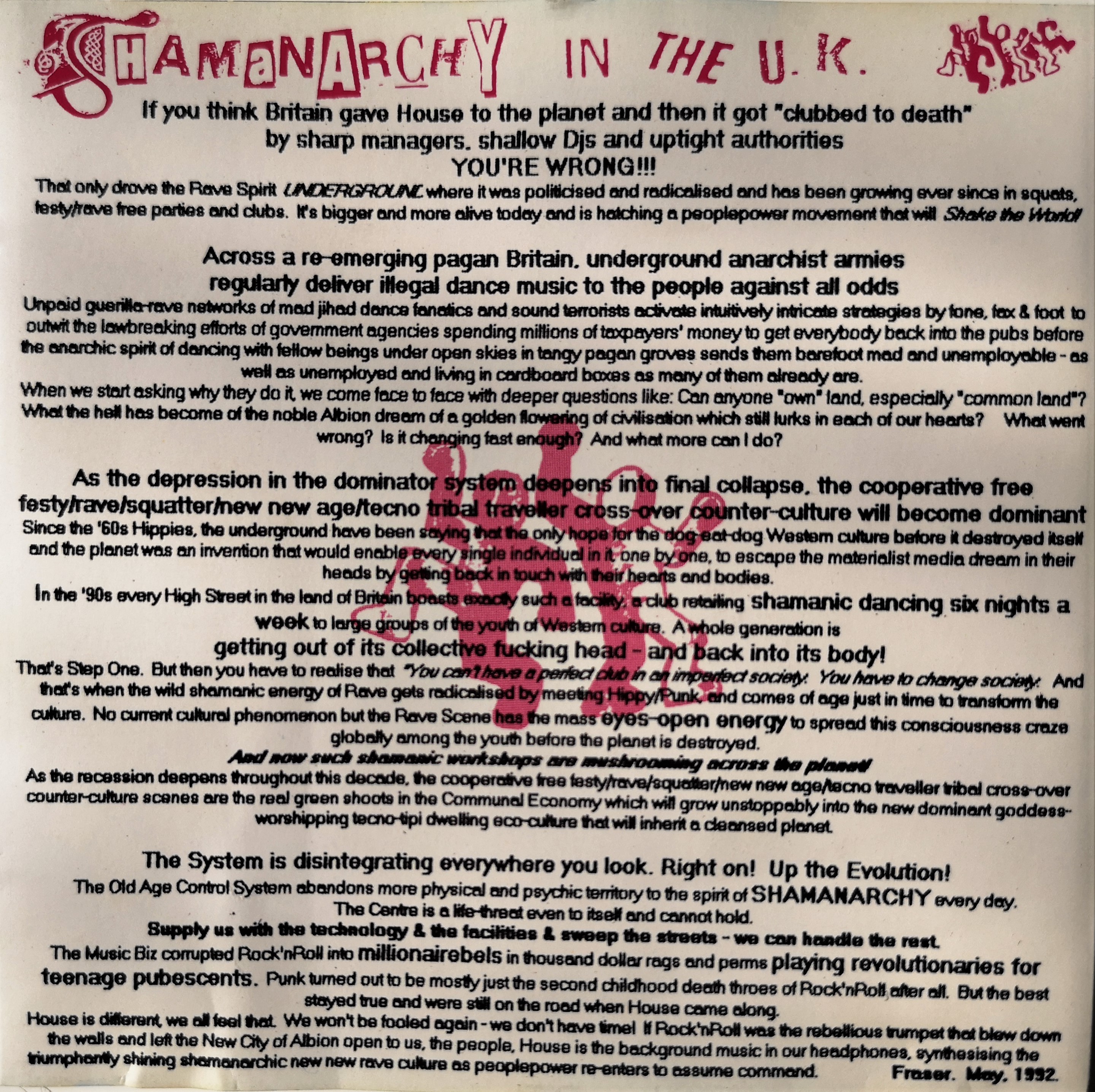
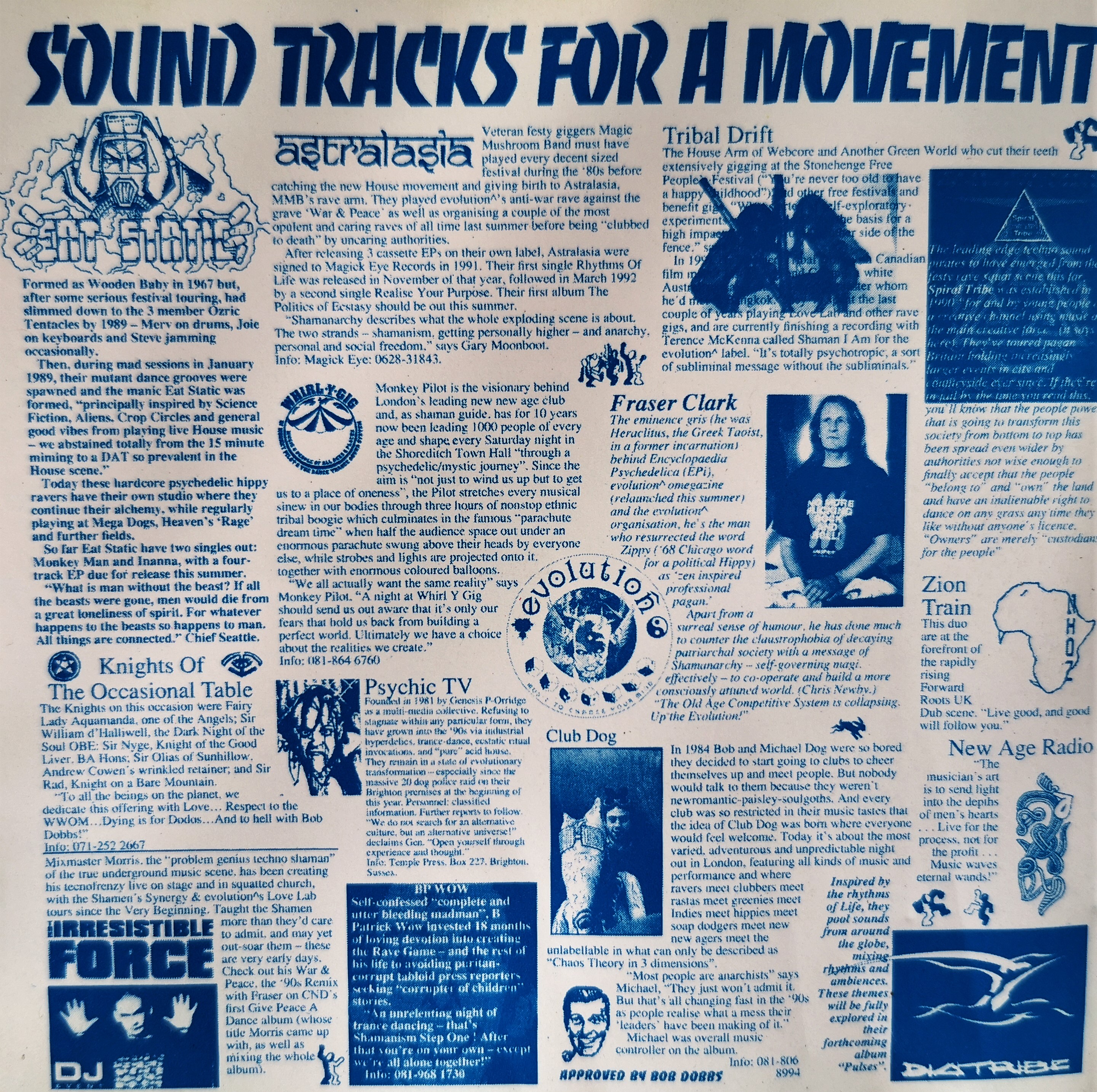
Yes, but there are so many. Some albums seem essential to me for discovering or rediscovering that era: Shamanarchy In The UK (Evolution, 1992), Feed Your Head (Planet Dog, 1993), The Irresistible Force, Flying High (Rising High Records, 1992), Spacetime Continuum with Terence McKenna, Alien Dreamtime (Astralwerks, 1993). The series called Club Meets Dub (Zip Dog Records, 1995 / 1998) encapsulated the connection between psychedelic, dub and UK clubbing.
EB
The chill out room culture that defined 90s Britain, such as the influence of Telepathic Fish has left a lasting impact on keeping ambient and downtempo music inside the club. Did these types of event formats take place in 90s Belgium?
DJ Athome
Yes, but from my point of view it's not comparable to UK culture. Italy has been more sensible and reactive to the heritage of ambient and downtempo music. After the New Beat era, we had to wait for the arrival of Trip-Hop and Digi-Dub for audiences to start reacting differently to slow, hypnotic rhythms.
However, during the 90's there were clubs with Chill Out Rooms like Fuse, Boccaccio, and Cherry Moon.
Numerous chill-out compilations were also very successful in Belgium, such as those released by Beyond Records, Incoming! Records or Instinct Records to name the most famous and sought-after ones.
EB
What do you think the future of psychedelia is to become? Are there any artists at the moment who are pushing the sound into new and interesting territories?
DJ Athome
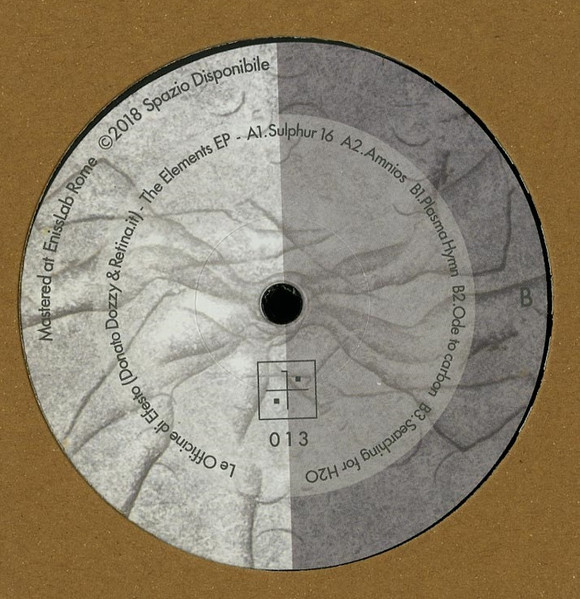
I think psychedelia can take various forms. Some artists don't label themselves as "psychedelic" yet produce music that is fundamentally cerebral. DJs create trippy sets without necessarily playing music classified as psychedelic. The future lies in the ability to induce an altered state through sound texture, mixing slow beats, playing wrong speed (33 rpm instead 45 rpm) or polyrhythmic beats. I'm thinking in particular of the label Spazio Disponibile, which produces highly immersive music.
DJ Athome
A label like LSD (Liquid Sound Design) continues to release music via Bandcamp. Some of the productions are a bit cheesy for my taste, but the label remains worth exploring. I'm happy to see that The Ullulators are still very active on bandcamp.
Djs like Jane Fitz, Vladimir Ivkovic, Craig Richards, Mr Ties, Dj Nobu, Nicolas Lutz, Anatolian Weapons, Hugo Sanchez (Tropicantesimo, Front de Cadeaux) and so many others have broadened the sonic landscape and future horizons for a more visionary dancefloor.
"The future" is still too heavily marked by a spirit of competition and performance. What is involved here is the opposite approach, and it is disappointing to see that financial speculation surrounding the resale of CDs and vinyl records from that era distorts the underlying philosophy and reproduces the logic of capitalism, effectively limiting access to this music to those with the financial means.
But this also acts as a driving force to subvert that logic and continue exploring the possibilities of DJing for oneself, a record spinning at the wrong speed or playing with hypnotic locked grooves. Psychedelia has no formula, and DJ Marcelle proves it to us every time; it is simply a matter of approaching music (regardless of genre) with freedom, improvisation, unpredictability, and, above all, a continuous exploration of sound, groove, and cadence. Psychedelia still has a bright future ahead of it.