
Editorial
Echoes of Rituals, in conversation with Vinthya Perinpanathan
by El Bickers
withVinthya Perinpanathan
Credit: Shehan Obeysekara (2026)
The term 'chill out' derives from the gutted-out corners of clubs in 90s Europe, cloaked in a tapestry of textiles, neon paint, and oddball ambient frequencies. Such culture paved the way for a style of music known as 'chill out' to flourish, which naturally collided with the new age spirituality movement. Artists from the west voyaged to places like Goa in India to experience this hedonism, to borrow and bring back ritualistic symbols that ultimately, are hugely decontextualized from spiritual practices in the west, and fall into colonialised behaviour. In some ways, chill out's digression as a sound, leant into these same practices of fanning freedom without any consequence. At the same time, eurocentric western cultures lost a deep history of paganism and ritualistic beliefs at the hands of Christianity, whereby psychedelic music culture has been engaged with reclaiming these ritual rites. Yet, the reclamation has been that of other cultures where the line between appreciation and appropriation is easily crossed. Often termed as 'Eastern philosophy', this blanket term for indigenous symbols and ritualism in Asia, is vague and results in misinformed exchange within our music communities. Instead of engaging with this vague phrasing, this conversation dives into the practice of Vinthya Perinpanathan, who has been investigating ancient ritual music from Sri Lanka, and the cross-cultural exchange that adds knowledge, depth, and understanding, rather than subtracting voices from the source. Her work sheds light on the history of Sri Lankan music, the need to engage with cross-pollination responsibly, and the complexity of rituals.
EB
Can you introduce yourself and your academic artistic practice?
Vinthya
I'm predominantly a composer and I'm coming towards the end of my PhD in Composition (with Ethnomusicology) researching some of the many music traditions in Sri Lanka. My work is centred around the older practices across mostly Tamil and Sinhalese ethnicities, but I don't often like to word it like that these days, due to the increasing ethnicization of music and how that can be quite damaging. My musical thought processes have become less and less binary over the three-year project, but ultimately it started with combining either Sri Lankan and European or Sinhalese and Tamil music cultures which, at the surface, seem different from one another. For example compositionally, how does that look in terms of tuning and rhythmic systems, or the way music is either written/transcribed or communicated orally. What are the language barriers and different reasons for practice? Say, if you're working with an instrument that is used outdoors, it's going to be really loud so that it carries, but then how does that work when you want to try and bring this instrument into a concert hall where the acoustics are inherently different and the volume would be too loud? This research is about exploring all these challenges and figuring out how to bring music from different places together responsibly.
I don't believe in this one
EB
You say all these elements are very different from one another. Was there anything specific that you researched that helped join all the dots together, both from a compositional and cultural perspective?
Vinthya
I experienced a lot of epiphanies when I really stripped back and simplified things. Even with "difference", when you strip it back to just what the musical gestures are, then they're actually quite similar. For example, slow to fast, rhythmic to static, loud to soft. Often you're telling stories and the emotions and needs that we all feel as humans could be common to us all. Those things might be expressed differently amongst cultures, but ultimately it's a similar pulse that we feel as humans. How it's written and communicated is what changes.
From a cultural perspective I think the eureka moment was when I moved away from classical idioms and more towards older, folk traditions. That's when I started to see that culturally music is always present, such as when we're celebrating a bountiful harvest, or trying to get the community together, or someone's getting married, someone's funeral, celebrating achievements. Music in these places is often where you can connect dots between why people celebrate and the music's presence in those spaces. It was interesting to revisit ideas of Absolute / Programmatic music after all of these eye opening experiences from a non-"Western" lens.
EB
Do you have any explanation as to why people unanimously celebrate these folk traditions and what are some of the parallels of the folk traditions that you looked into
Vinthya
There are many parallels, especially percussive and rhythmic ones, the omnipresence of drums across folk traditions, sometimes without any melodic instruments. When there are melodic instruments, the playing techniques are a good example; across various folk traditions they're often quite improvisatory and use extended techniques that are quite similar, e.g. pitch bending (glassandi), repetition and lots of and varied ornamentation. They are not trying to be virtuosic but more for everyone. Quite different from a trained and technical performance practice (not to say that folk music cannot be complex!)
EB
when you say virtuoso is that like the lead?
Vinthya
Yes, a lead, a soloist. I first came across virtuosic players through concertos, where a soloist is accompanied by an orchestra, which is often extremely technically challenging and intended to platform the individual. This is rare to find in the ritual and folk settings I've been researching. One tradition that really interested me is in the East of Sri Lanka is called Kuththu, which is a community-building theatre performance practice with stories constructed democratically. Vastly different from the stricter composer-performer roles I was used to. I found it beautiful, even in terms of how this music practice would influence daily routines. Hours of solo practice swapped for being together with the community.
EB
I feel like unity is a very big buzzword for people coming together. Do you see electronic music as also having parallels to this more communal and ritualistic dynamics, or do you see it as something separate?
Vinthya
It depends on the experience and intention of everyone involved. It's important to note why festivals can happen: are we grateful for the change of season, sun and landscape to bask in? Are we grateful for each other and the opportunity to meet others? There's been a time recently where I have felt it so deeply in my core, for example I went to Monument festival this summer and everyone was totally silent for the last track of the festival during Efdenim's closing set, and generally had so much respect for music, land and each other. People were hugging and just listening and I'd never had that level of attention in an electronic dance music space before. After this ended people brought their own instruments to the fires going on around the festival site - a sitar, percussion, shakers, guitars, voices etc. Whatever had just happened, meant that people wanted to continue gathering in a wholesome way and to continue to make music together.
EB
Going back to your practise and your PhD, what were your core motivations to start researching ancient ritual music from Sri Lanka on both a personal level and musical level?
Vinthya
I did my Masters in composition where I'd begun digging into music from my heritage continent, from an Indian classical perspective - looking at western classical music meeting both Hindustani and Carnatic traditions (which through history made their way to Sri Lanka too). This led to more questions such as 'what music is native to Sri Lanka?'. I guess ethnomusicology taught me a lot of critical studies to do with how music outside of Europe is othered. For example, the issues surrounding terms such as "world music". Music, food and culture from Sri Lanka and India are often misconstrued or clumped together as if they're the same. I wanted to find the sweet spot between understanding that there are parallels between the cultures, while also understanding that Sri Lanka has its own multi-ethnic history and thus, its own music. This is not a new phenomenon, for example, in Jim Sykes' 'The Musical Gift' one of the chapters starts ironically asking: 'Sri Lankan music? Haven't you travelled a bit too far south?'.
Secondly, a lot of instruments that I once thought were native to Sri Lanka, I've since realised were brought to, or passed through, the island. So, I am left with a real thirst and want to know what happened before this part of history, and what is truly native. And this led me to ritual and folk music idioms in Sri Lanka.
EB
You mentioned about native instruments and debunking what had an influence. Was there anything that specifically surprised you?
Vinthya
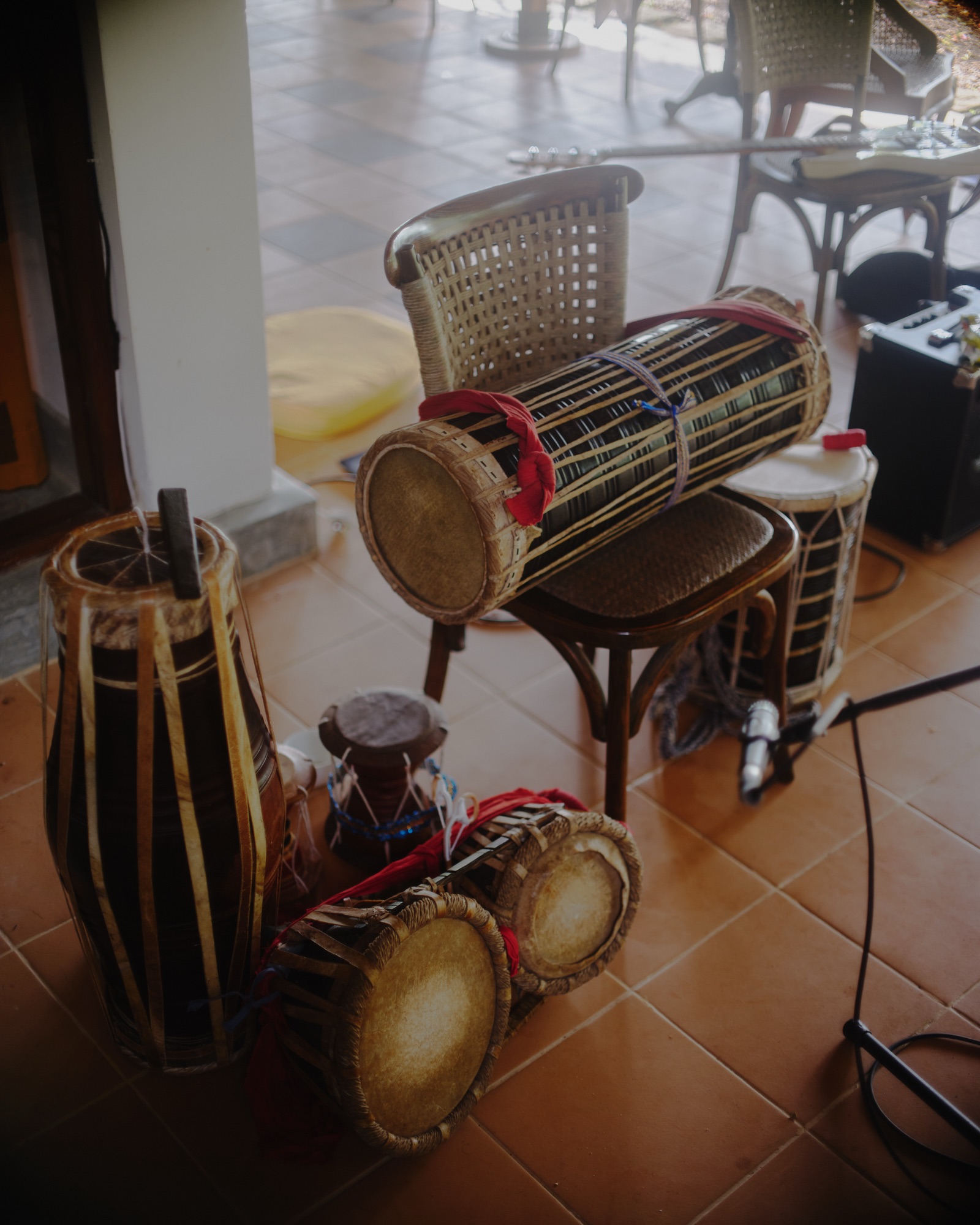
I was surprised by how hard it was to find music that hadn't been influenced by elsewhere. Either through the island's centuries old history of travellers passing through, shipping and trading routes and of course, the more recent colonial history and further touristic and extractive influences to this day. Even an instrument I was sure would be considered native, raban, a frame drum. I guess I was surprised at the level of influence despite seeming obvious in hindsight.
EB
Have you found any ethical routes or procedures where these two worlds can connect?
Vinthya
Through my research, I have spoken to a lot of people over the last three years in Sri Lanka, and I have found there are a lot more reconciliation music projects happening than I thought, and have been happening since the official 'end of the war'. For example, the Galle and Jaffna Music Festivals that emerged in 2009 and 2011 (respectively) and many more over the years where musicians from all districts would perform together and celebrate Sri Lanka's multi-cultural and multi-ethic population.
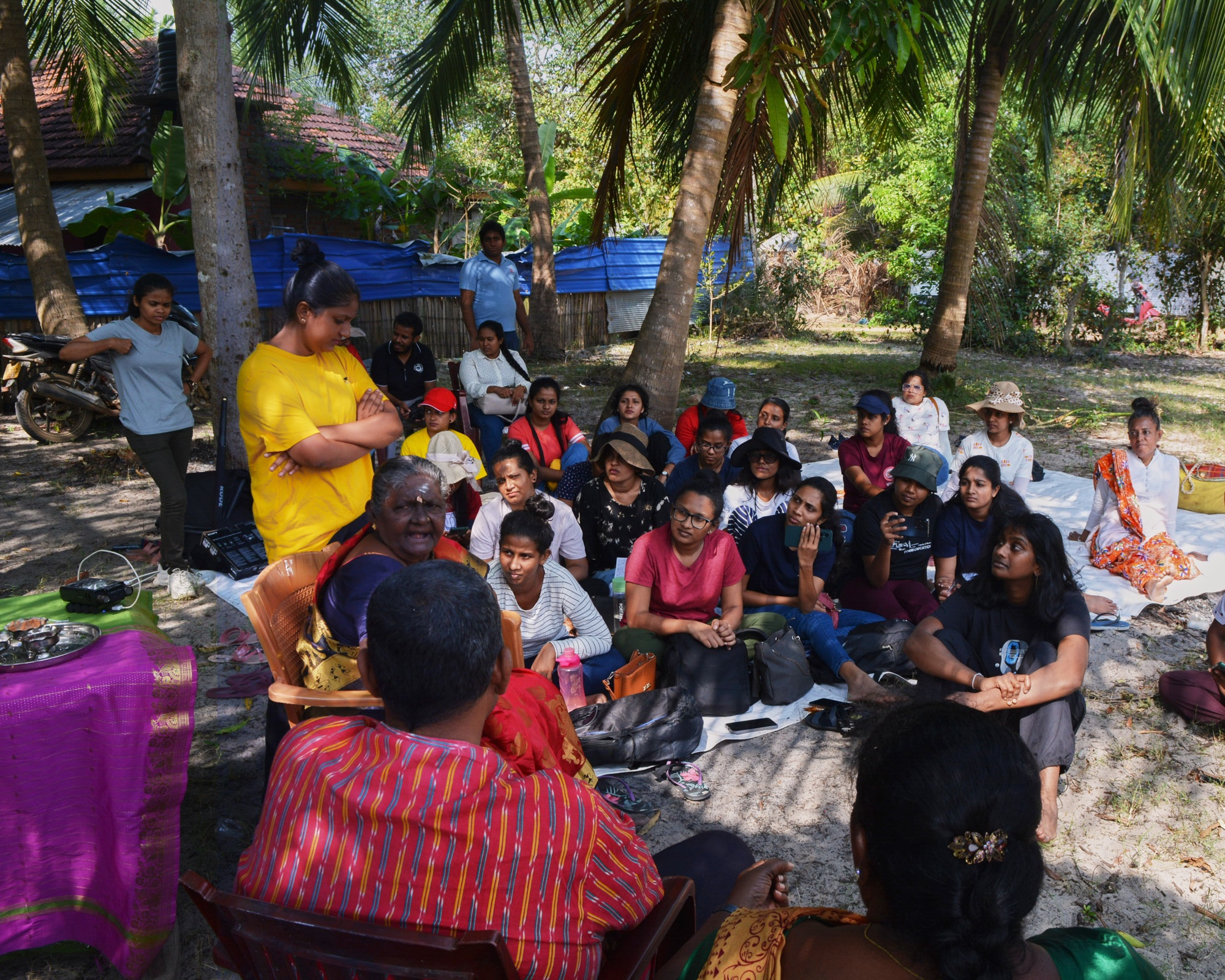
I also personally attended what I would consider a reconciliation effort in 2024 between two universities, in the East and in Colombo, where Tamil and Sinhalese students met, learned each other's folk music, and performed a concert together.
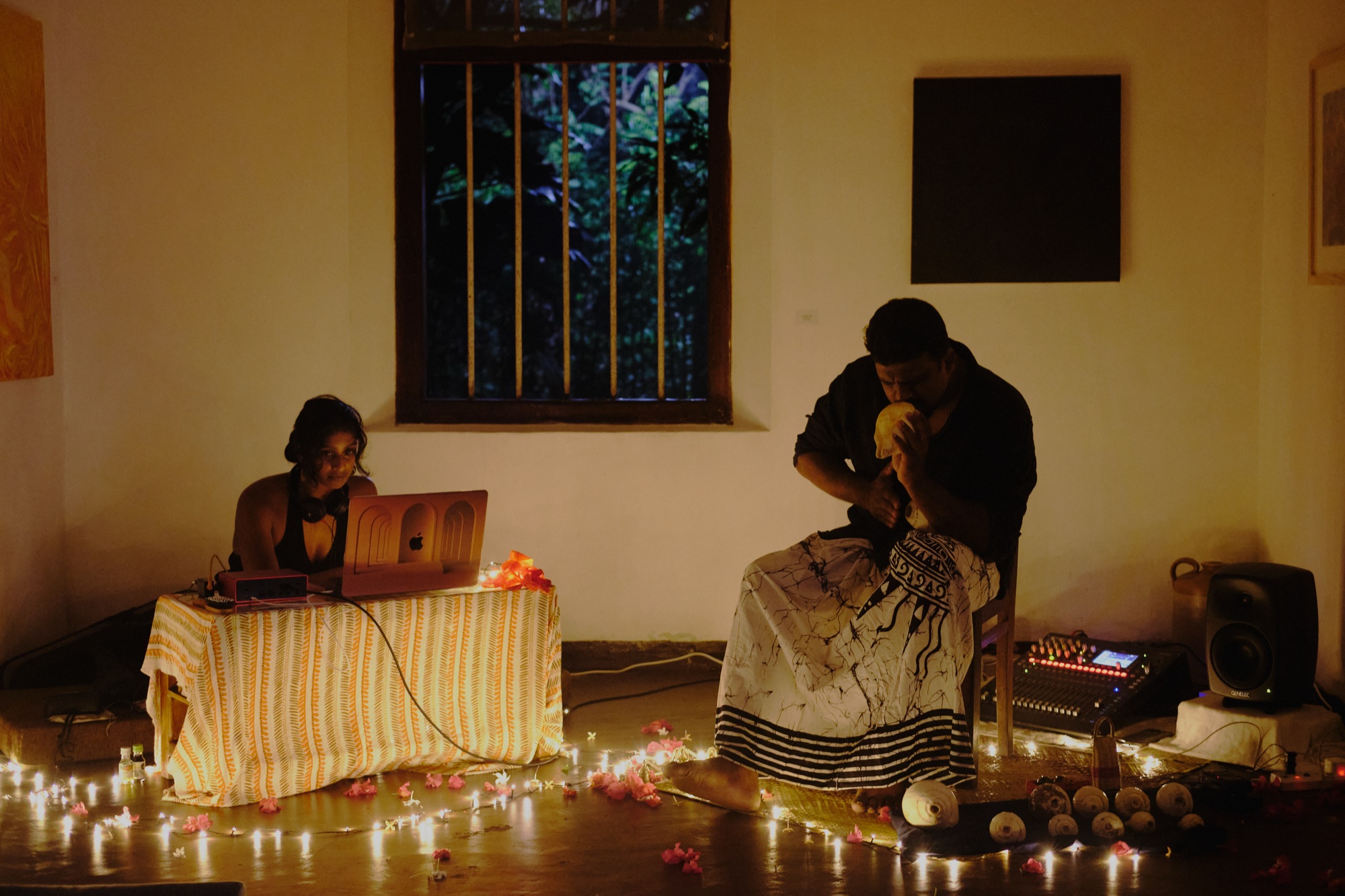
My ethics and efforts are practiced through music by researching and highlighting specific instruments that are shared. The conch shell, for example, is used by both communities, as well as other cultures elsewhere. In addition to this, the sornali/horanava, a small, very loud wind instrument, is also used in rituals by both Tamil and Sinhalese communities.
I think my most ethical approach has been to be this precise: to actually have "evidence" that there is shared musical heritage. To research what materials the instruments are made of, why are they played, who plays them and in what context? The knowledge of these things has made me more confident in finding a way for them to relate and meet in a musical space.
EB
This unity that's repeatedly used in the electronic music space can be positive and sometimes it can be harmful because music is political and music alone is not enough just to present an idea that everyone is together and getting along when there's a lot of destruction that has happened between two cultures or two groups of people. So I think it's also an interesting one, how music can play a role in bringing people together under some sort of guise of unification - how can that be treated with care and respect as well?
Vinthya
It is important to think about what the purpose of 'unification' is and why the music and gathering is political. Only by understanding the 'why' and purpose of gathering, moving, being in nature and meeting others in such places, having conversations that have impact on our futures, can we respectfully co-exist in them.
If at all based on older rituals, I think the experience of being 'brought together' has the potential to shape and transform individuals. The respect and care come from being open to this happening.
EB
Looking at the parallels between western perception of rituals in music, and the research that you've done in Sri Lanka, what does ritualism mean to you within sound and the culture that surrounds it?
Vinthya
Purely from a musical perspective, I'd say a ritual is often music that's loud. It's celebratory, repetitive, intense, percussive, and imperfect. It's often quite abrupt too, if it does change or stop, that tends to happen abruptly.
Rituals often occur in nature, which already adds more sonic elements into the space, depending on the time of day, the weather, where in nature you are, and what animals are present. In a monsoon, for instance, there's a whole different level of sound, the rain itself, and what the rain is doing to the biodiversity, and then how a vocalist, or someone using their voice, might react to that.
So I'd say ritualism is taking that sound to support a repeated act which plays a role in society and acts as a marker of importance to a culture. Sound helps to anchor the ritual, assisting to create the space for an altered state.
EB
That's interesting because in the electronic music scene in Europe, it is pretty much the opposite of everything that you have just said, where rituals are very seamless, soft and gentle, encouraging you to be individualised or introspective with yourself. The only place I can trace those ideas to are Western perceptions of meditation and spirituality. So I see a paradoxical interpretation here, which I find interesting.
Vinthya
Yeah, exactly what you've said. There's the hyper-individuality side of it too, everyone knows that individualism, independence, and self-sufficiency are held up as values people should desire, as if you're only truly "human" when you can look after yourself and don't need anyone else. People are often praised for that.
I think in some places in Europe I have noticed where electronic music upholds ritualistic values which some seek out, including myself, but I do agree these are often lost. This is of course fine as these are shared spaces with people who "just want to see a DJ I like", but I guess what we are addressing is when words such as ritual, community, spirituality, meditation and unity are thrown around in these spaces.
EB
Is there a specific ritual or a certain ritual within music or the surrounding culture that has stood out to you that you've experienced anywhere in the world?
Vinthya
Being born in Europe, and with my experiences in Sri Lanka so far being with an observer's lens, I would have to note a European festival here, but in the context of where my mind is at. I think my research has had a huge impact on how I experienced festival spaces this summer.
It's when you feel that everyone's attention is on the same thing, and you can taste the soil being tossed up from the dancing, a lot of bare feet (better if everyone was all the time), which is perfect, it changes everything. You fall over a lot less, you're not unsure of where the ground falls and rises because your feet are so in contact with it.
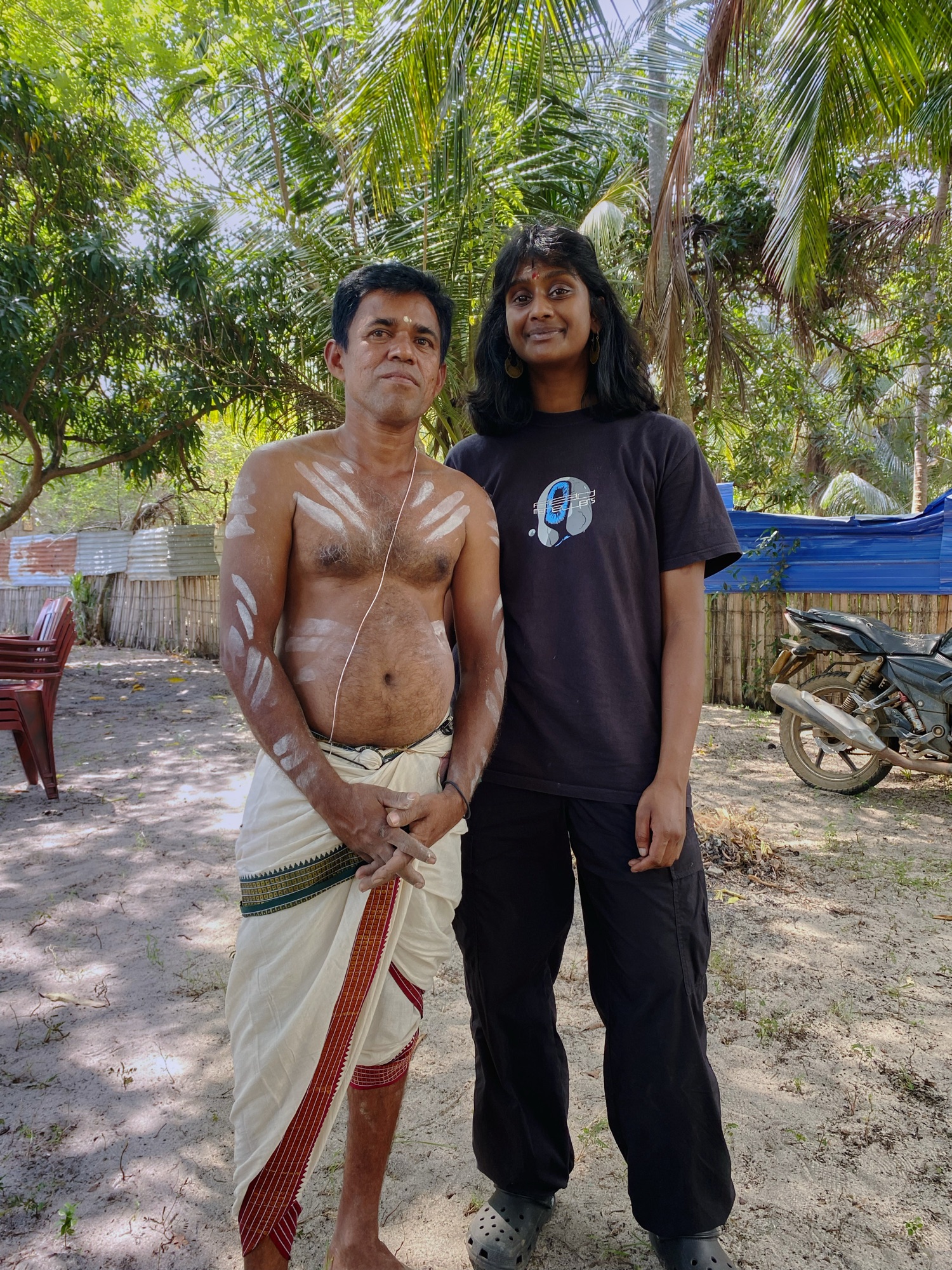
In my research in Sri Lanka I have seen and read how rituals work with the pulsing and repetitive drums, movement of the body, bare feet and a commitment to that moment in time. There are so many I have heard of and cannot wait to experience as I spend more and more time on the island.
EB
So, what specifically is a ritual? And what does it mean?
Vinthya
Good question. I think a ritual is a repeated act carried out as a response to a natural phenomenon. Nowadays, it has become popular as a really personal, day-to-day routine. That's why it's so hard to define. It can be anything these days, but I think, traditionally, it was more of a communal activity.
EB
Do you think it has to encompass more than one dimension? Or senses?
Vinthya
Yes. Most rituals I can think of encompass all the senses, sight, sound, smell, taste, touch. Adding to the timelessness of it. Something that makes me feel like I'm right here, present, but also like I could have been doing this and feeling this same thing many times before. I think traditional rituals can feel that way because they're so old, because they've been anchored to changes in nature, which have been happening forever.
In that view, rituals that have lasted the test of time convey the importance of a specific phenomenon to that culture and therefore highlighting its significance.
EB
When we're looking at the Western context of music, where do you think this utilisation of sounds and symbols from other cultures such as Sri Lanka and areas of South East Asia, can bring about positive culture exchange, but where do you think it can also be culturally harmful?
Vinthya
I think the benefits are apparent in the way people seem nourished, held, supported and understood by what they have gained from a cultural exchange. However, it can be extremely culturally harmful when things are taken out of their context in general. The act of recreating something from somewhere else, in a different context, often happens so quickly, without the necessary depth and consideration. It's harmful for that reason. Yoga is a great example of where cultural exchange has been both positive and harmful.
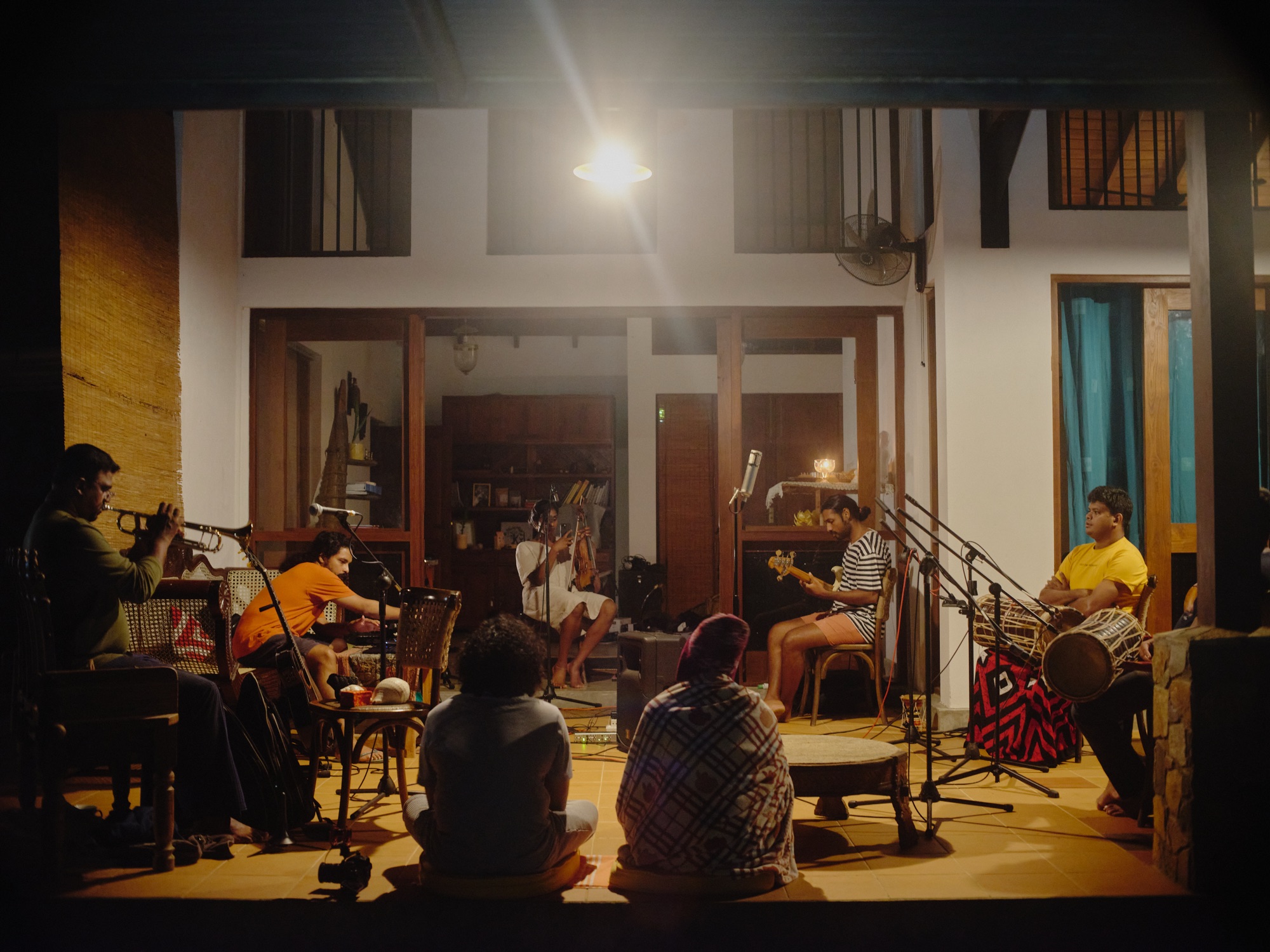
This can also be true for sounds and symbols. The cross and inter-cultural music work I do was motivated by all the reasons I saw to be positive with combining, merging and exchanging music, however, through this work I have become aware of the risks and harm that can come about. Questions around ethics, permission, ownership of music, and abstraction of the music from its ritual context. A great example is the issue surrounding the quantising of ritual music to suit a sample pack format for producers. An open conversation about this was held between two ritual musicians and seven contemporary musicians (including myself) during a residency (Mallung X Space Eka) in Deniyaya, Sri Lanka. What happens to this music when it is quantised? Why does it need to be quantised? Does the quantising take away from the character of the music? Who benefits from the quantising of this music?
The harm usually comes from the pace at which cultural exchange happens where questions such as these are not discussed or considered. This issue tends to circle back to the commodification of cultural practices as there would be no rush otherwise.
One honest note on cultural exchange: I get a bit sad that it is often only one way. All exchanges, yoga, music, food, have the tendency to feel and be extractive: for example, going to India, attending a 200 or 300 hour course to become a teacher of what usually is a lifelong practice. Or in my case, fieldwork, going for a month or two at a time during a PhD, then coming back to present all my work here. Where's the two-way exchange in those examples? I think that's a way in which I find it harmful, as a diasporic person with a strong connection to my homeland, because I have deep empathy for the fact that people there don't benefit as much as people here do. I want there to be a bit more equality in terms of cultural exchange, so I guess that's what I am building myself.
I think the people who can make a difference need to do so, with care, and have more influence on what and who they support, because if music is storytelling, and political, then surely we want stories from everywhere to be told, and told right.
EB
I think that's a really nice sentiment to be so rooted in storytelling, but we're only telling a handful of stories which means we're only exchanging very small amounts of knowledge and understanding. What is your opinion on rituals and meditations being used in listening events?
Vinthya
I think that what one would learn from meditation, ritual, active listening, and all the lessons we've spoken about in this interview are ones that would be great to imagine encompassed in a chill out room, in a listening event.
My opinion is that I'd like it to be done correctly, but I don't really know if I'm the one to say what "correct" is, which is why I've often fallen silent on it because I am still learning. But I'm starting to get a sense of what it looks like, which is, ultimately, quite a lot of kindness and compassion, something that isn't spoken about that much.
Take "no talking on a dance floor", it's a good example of this, because a lot of the time that rule gets framed with people's clashing opinions. But actually, the reason I ask people to keep it down on the dance floor is because it's a loving thing to do. Everyone has paid, everyone wants to be able to listen, and it's just inconsiderate to be really loud when that's going to impact other people's experience.
I wanted to tell you about an experience at this same festival I went to over summer: there was a chill-out space, a tipi with a fire in it, and everyone was really quiet and they served chai. There was an etiquette around that chill out space, just like there's an etiquette around a dance floor, the same level of care for what they're actually there for, people stayed quiet and considerate, because that space is for people who may want a moment of reflection, a moment of peace. So in answer to your question, building a chill-out space or listening event around rituals such as the brewing of chai, making of a fire, maybe has these positive impacts on how people conduct themselves within.
EB
What's the biggest lesson or discovery you've had from your research into ancient ritual music in Sri Lanka?
Vinthya
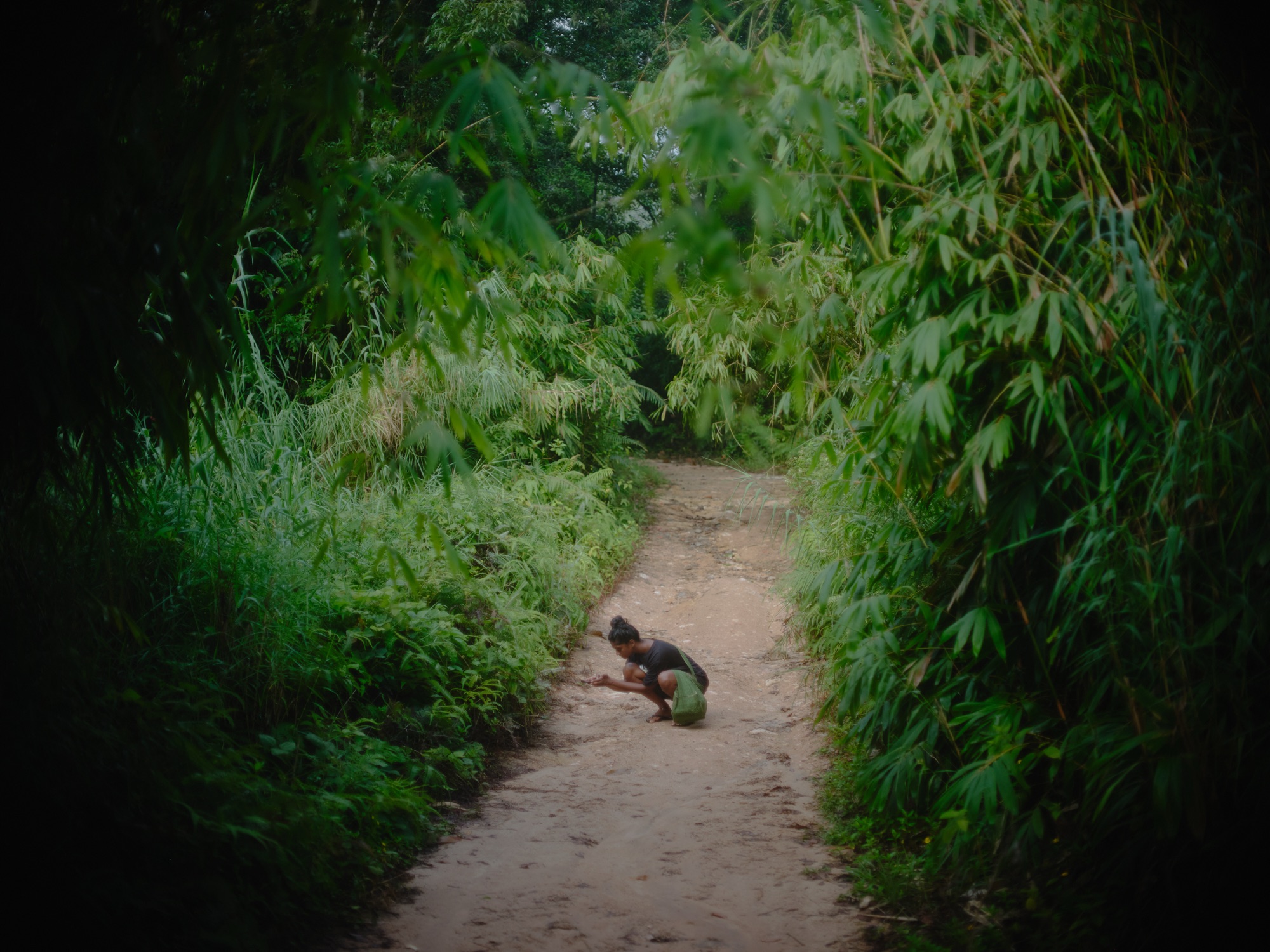
I feel like this is going to sound so cliche, but all the answers are in nature and in the past and that everything is connected. I think the biggest lesson has been that these parallels exist because they're often built on things from the past, or from nature. And I think the more we pay attention to them, the more I've felt that life is beautiful, that humans can do incredible, beautiful things, but there's a sweet spot, and less is more.
If we were doing this back then, feeling this way, having these moments of happiness and connection, doing all of that ages ago, it shows we don't actually need that much to create that feeling. We get to do it now in different ways, but still evoking similar feelings, because of human development such as new tools, electricity, travel, etc. But we don't have to use everything at our disposal to create that same feeling. I learned this through composing too.It just comes from paying attention to what has been done before, to listening, to being here and now.